
PenguinGate... a Timeline

“Matthew and Paul” has been a trending topic on social media this week. Let’s talk about why. Paul Castle is a blind, gay, self published children’s author and illustrator who’s built a large following online sharing heartfelt experiences with blindness and his series of picture books about queer penguins that love each other. Over the last two years, he and his partner Matthew have also built a reputation for controversy, and not because of Castle’s books, but because of how they talk about them.
Across multiple viral moments, Paul and his partner Matthew have framed professional setbacks as discrimination or censorship. Each time, those claims spread fast, drew sympathy, and sold books. But those moments also left confusion and harm in their wake.
This article outlines what’s happened so far, event by event. It’s meant as both a record for those already following the story and a starting point for those hearing about it for the first time. It is long. I am sorry. Please use the navigation as needed.
Before we dig in, I am a disabled writer, and this article took days of research and writing to accomplish. It's very important to me that it is freely available, but if you are someone who values paying people for their labor, consider sending me a coffee on Kofi. Even small tips make it possible for me to keep writing thoughtful, well researched articles like this one.
If that is not within your means, but you would like to pay it forward consider subscribing to this free weekly newsletter.
June 2024 - The Wrong Tanya, The Wrong Bookstore
Castle posted two emotional videos in June 2024 claiming that his children’s book The Secret Ingredient had been banned by a bookstore. He told viewers that the store had ordered 100 copies, then canceled after learning the book featured gay characters. “I can’t think of any other reason,” he said. The videos drew widespread sympathy and drove a large wave of direct sales through his TikTok shop.
A book ban is when an individual or group calls for a library or bookstore to get rid of a book due to content they deem objectionable. Book bans are a growing problem across the United States, especially the last few years as organizations like Moms for Liberty have formed, along with strategic plans that have successfully removed hundreds of titles about queer identity, race, and gender from schools and libraries.
Authors and book industry professionals quickly questioned Castle’s story, noting that it would be unusual for a small bookstore to order 100 copies of any single title even if the author was huge.
Castle clarified that the order had been tied to a planned book signing event. According to an email he read aloud (via screen reader), the staff member who arranged the signing had left the store, and management decided not to continue. The email stated that the employee “wasn’t entirely up to speed on store policies” and that, while the book was “charming,” it wasn’t something they could stock at that time.
Why is this controversial?
Castle called this a book ban, which is a serious accusation not to be thrown around lightly. Could that bookstore have decided not to proceed because of the gay content of his book? Yes. The “policies” the book didn’t align with could have been horrid values-based policies, but other things could have been at play as well. Bookstores and libraries have collection curation plans to match their demographic’s needs and wants. So if their demographic doesn’t typically purchase children's books or value LGBTQ+ rights, that could be a reason for them not to stock the book. If the store doesn't curate those materials or curates them very strategically its definitely NOT a ban. Again, being a small bookstore, one whose profit determines their livelihood, they're going to cater to what their customers will purchase. Not stocking a book, is not the same as a ban.
When Castle frames an order return as a “ban,” he trivializes those fighting genuine censorship to center himself as a victim.
Castle’s followers took it upon themselves to go after this bookstore and Tanya from the email, in full force. This led to a different Tanya (Tanya Lee) being harassed. This Tanya was wholly unconnected to the situation and didn’t even own a bookstore, but was the organizer of a book club.
Castle leaned on his audience’s sympathy during pride month, a time when allyship is strong. These videos were also sponsored ads with a link and a call to action to drive traffic to that link. This situation was seen by many as pity marketing.
The video was vague and leaned on buzzwords/phrases typically designed to elicit extreme emotions from his audience. Once explaining a bit, many felt these buzzwords/phrases (like: “they banned my book… because of the [queer] content”) were not accurate choices when telling this story, and he continues to this day to use them when talking about this situation.
Castle notably deleted comments from his videos where people questioned or criticized what was happening. While it is completely reasonable to delete harassing comments, crafting one’s comment section so it is wholly in agreement with oneself, in my opinion, lacks honesty and integrity and eliminates opportunity for education and discussion.
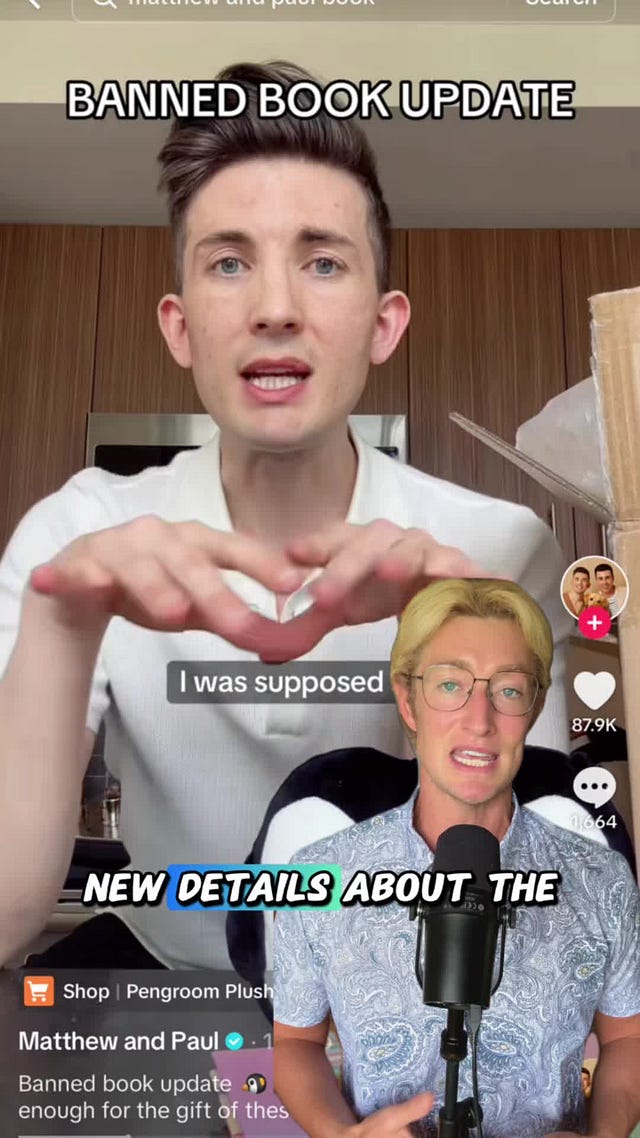 @bydonmartinThere are real people being caught up due to a lack of information and clarity. @matthewandpaul you owe it to your impassioned fans and those on the receiving end of these comments to provide closure. As people with large platforms, we have a duty to be good stewards of the privilege that comes with it.
 Tiktok failed to load.
Enable 3rd party cookies or use another browser
This claim by Castle could be true. Due to his claims of being wronged again and again, I doubt it. But you decide for yourself as you keep reading.
November 2024 - Review Bomb Claims Turned Into Review Sculpting
In the lead up to the holiday season, Castle posted a tearful video that got over 6 million views, where he said his book The Secret Ingredient, which features LGBTQ characters, was being review bombed.
A review bomb is when a group of people leave reviews on a book they’ve likely never read. These reviews usually are negative and usually have nothing to do with the product or its quality, but rather personal feelings or values around the product. In this case, homophobia surrounding a book about gay characters.
Instead of just having the reviews taken down, Castle showed a few negative reviews with hateful queerphobic themes to his viewers to raise awareness of the issue, elicit an emotional response from his audience and send them to his TikTok shop to show their support.
Afterward his partner Matthew posted another sponsored video asking Paul “how many reviews did your Secret Ingredient book have on Amazon?”
Castle replied, “Like 42?”
Matthew goes on to reveal that it suddenly has over 2000 reviews.
For these reviews to be legitimate, over 2000 people would have to purchase, read, and honestly review the title in a suspiciously short window.
Why is this controversial?
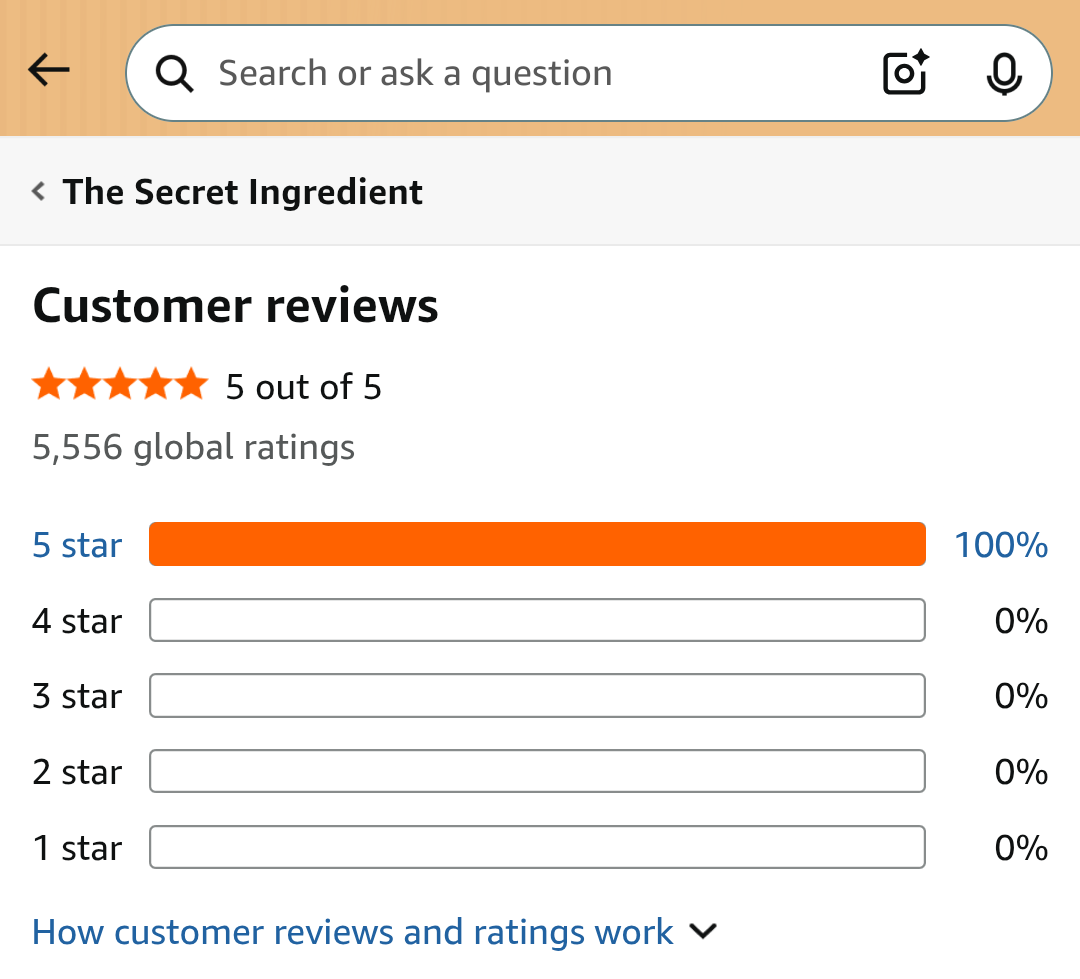
Castle telling his massive audience that he had been negatively review bombed was an indirect encouragement for them to go positively review bomb the book. Whether they had read the book or not, his audience left positive reviews thinking that they would balance out the negativity of hateful one star ratings. They thought they were fighting hatred. The issue is that Castle can and did request to have those negative reviews removed, because they were not valid product reviews. But it’s doubtful his audience knew this was something he could do. In addition, Castle certainly didn’t request that positive review bombs be removed. As of this writing, his books sit strangely high. The Secret Ingredient has over 5000 reviews and a perfect 5.0 star rating. His other book, Pringle and Finn has almost 500 reviews has a 4.9 star rating.
This is called review sculpting.
In the book industry, it is very rare for even a great book to be rated above 4.7 and in fact the more the reviews trickle in, the lower and more balanced the ranking becomes. Because no single book is for every audience.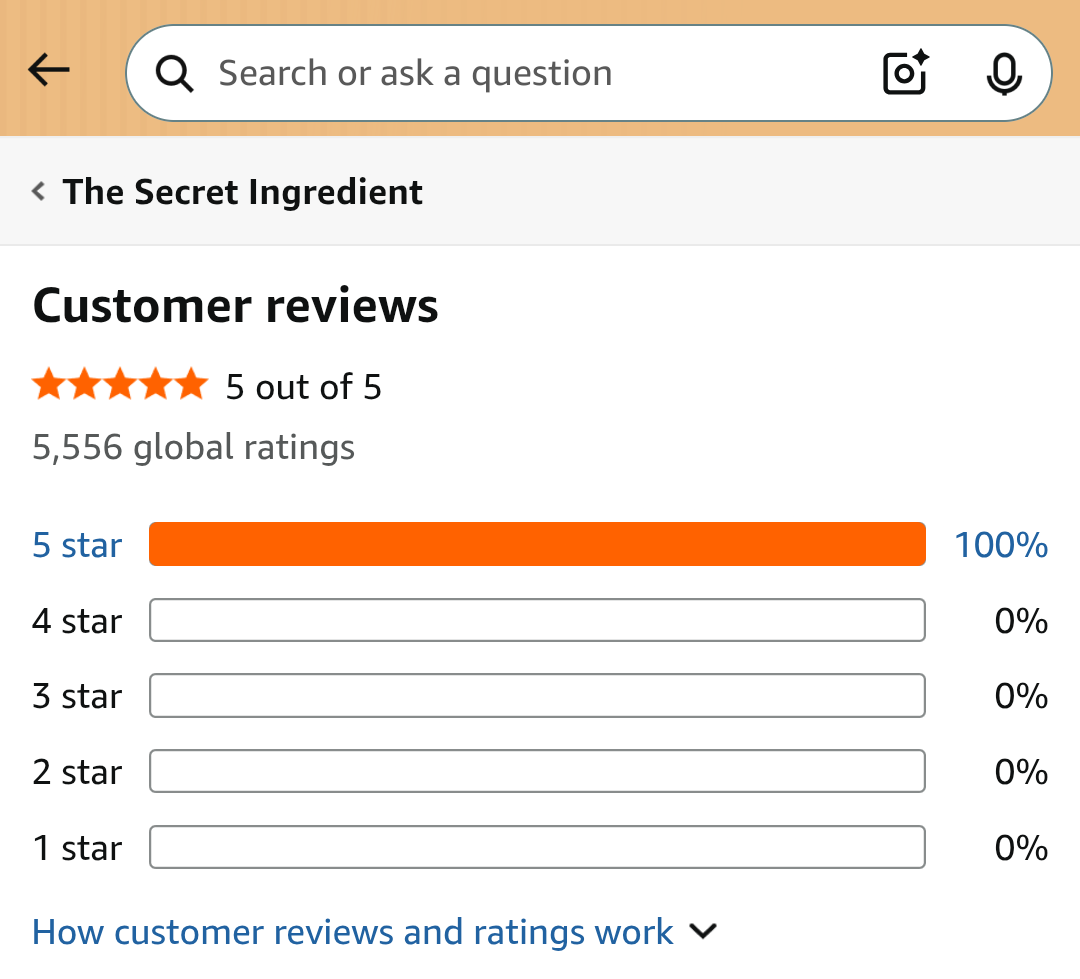
No one can actually verify if a negative review bomb occurred in the first place. Because those negative reviews have been completely wiped. We don't know if the negative examples Castle showed were only a handful or if there were hundreds of them. We literally cannot check for ourselves if there were 5 queerphobic reviews, or 500.
There are of course repeat red flags as mentioned before. Timed for the holiday shopping season, again the video was sponsored, and the call to action clear: buy my book to fight homophobia and discrimination.
June 2025 - The Wall of Boxes
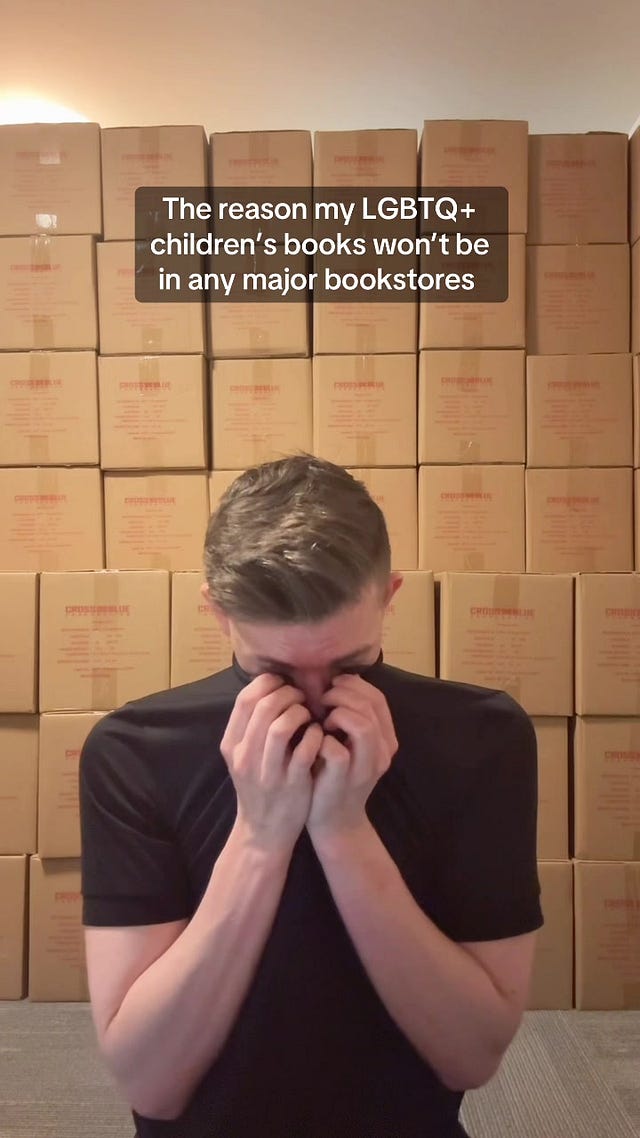
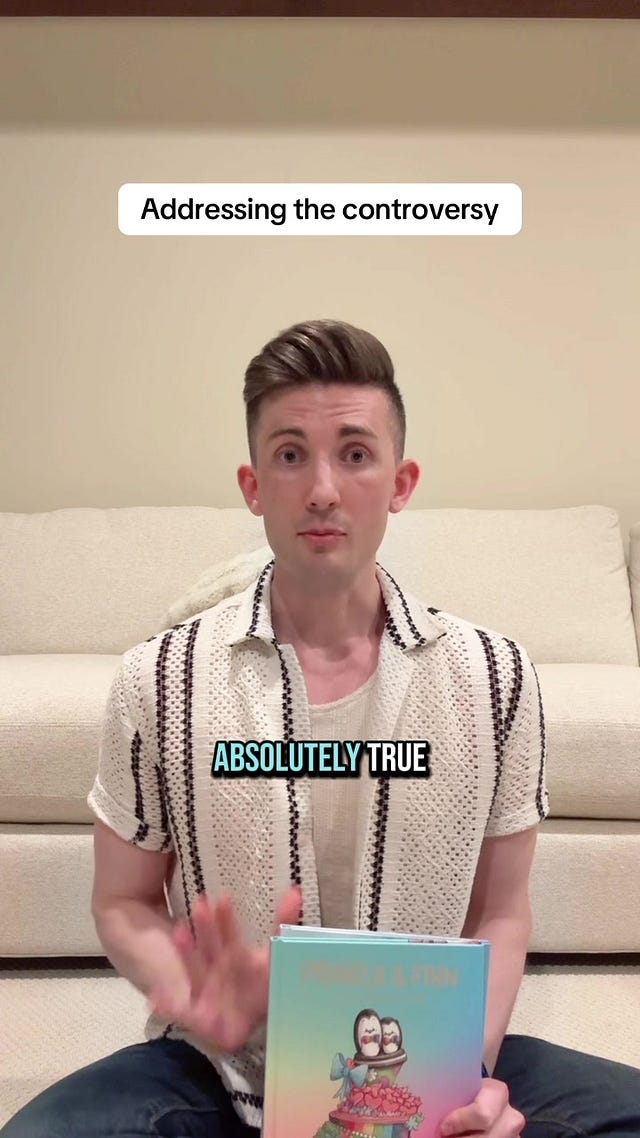
June, again pride month, Castle posted two very emotional and tearful videos which collectively got 13 million views. This time he sat in front of a wall of boxes of product and shared with his audience that “the book deal is not going through”. This video was framed as Paul Castle, the lovable indie author, being barred from another bookstore, in this case a bookstore chain. He claimed that the chain had requested that he change the title of his book from The Pengrooms to something less controversial in order to be appropriate for their children’s section. He changed the title, bought stock, but the bookstore told him they couldn’t purchase his book because they weren’t in the system they order from, Ingram. After getting in touch with Ingram they told Castle he didn’t qualify to use their system because he didn’t have ten titles.
This is when authors and industry professionals started to question things. Indie authors don’t need ten titles to use Ingram. Bookstores don’t get to change your book’s title. Things weren’t adding up and it was becoming harder to believe so many “horrible things” kept happening to Paul Castle, especially as we learned how he sensationalized past events.
Castle made another video where he explained he was actually speaking as a publisher, Paul Castle Studio. And this is super important because, months later, people are still entering this conversation confused. This detail is a keystone to the story and one Castle chose not to include.
Matthew and Paul determined that they didn’t want to use Ingram’s indie author program, Ingram Spark, because it was too expensive. They’d decided that as a publisher they wanted to utilize Ingram’s Wholesale department instead, but didn’t meet Wholesale’s criteria, in part because Paul Castle Studio represented too few books (ten minimum, PCS had only five planned titles). Exhausted as we were by pity marketing, the community likely would have been grateful for this clarification and left it at that, except many of us began seeing harassment from Castle’s following. But more on that later…
Why is this controversial?
Castle framed basic business as misfortune. It’s my opinion that, knowing people might not understand the whole story (especially since he didn't give them the whole story) Castle prioritized the message “The book deal isn’t going through”. His goal wasn’t to share a genuine picture of his publishing journey. It was to make sure you walked away knowing he desperately needed help and to please go buy his book. Meanwhile his desperation, if it existed at all, was based in his own business decision to not use the distribution service available to him—one that would make his business grow.
Castle wasn’t a struggling indie author, he was a too-small publisher.By this point, people had noticed a trend in Castle’s storytelling of remaining vague and sensationalizing details, we think, to make a buck. I dubbed this as pity marketing in my June 2025 article which you can read here.
PCS made the choice not to go with Ingram Spark for indie authors, claiming it is too expensive. But that is also misleading. There is no upfront expense to Ingram Spark, but they do take a cut of your profit. Not making the desired profit is not the same as paying an expense.

When people questioned him in the comments, Castle deleted the critical ones, leaving behind a curated feed of supportive messages. Again, removing harassment is in my opinion encouraged, but erasing all dissent creates the illusion of universal agreement. It is a strategic choice to control narrative.
Castle also claimed to be stuck renting two storage units full of unsold books “with nowhere to go” framed as if this was a result of the bookstore/Ingram issue. But he later admitted that those boxes were normal business inventory, his warehouse stock. The storage wasn’t an unexpected loss or a penalty caused by Ingram. It was a business choice he’d likely made long before this event, as part of his business operations.
In the same breath, Castle said his book was well beloved, that he’d received offers from major publishers, and that online sales were strong. If the book is selling that well, how could all that inventory have “nowhere to go”? This is just another example of careful buzzword phrasing.
Citing me, Castle claims what’s happening to him is not the norm. That instead PCS must just be disrupting the norms of the industry. And as I’ve said in past articles, anyone claiming to disrupt the industry… isn’t.
Castle claims he’d name the bookstore chain, which would allow folks to investigate the truthfulness of his claims, but he never did. (Honestly good, because his fans would have threatened them.)
 Tiktok failed to load.
Enable 3rd party cookies or use another browser
 Tiktok failed to load.
Enable 3rd party cookies or use another browser
In this series, Castle says “I guess I’m making this video in hopes that it finds the right people. Maybe you know somebody who could help us out at Ingram. Maybe there’s something that we haven’t even thought yet.”
This leads to two things happening:
A representative from Ingram begins offering her knowledge to the discussion via social media.
Castle makes a video with… something they hadn’t even thought of yet.
Emily at Ingram Spark
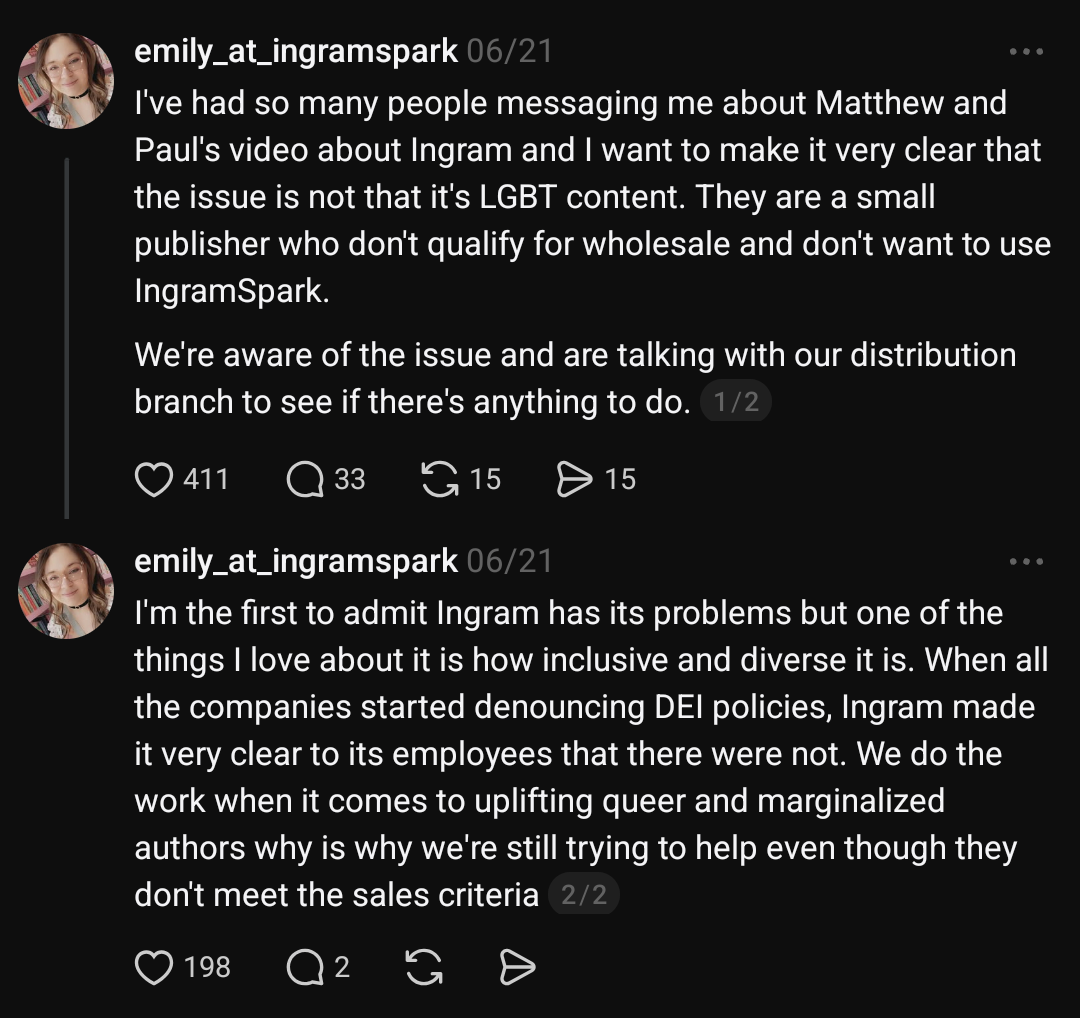
At this point an employee from Ingram began to speak up on social media’s Threads about how Ingram works, in an attempt to help answer questions. Even though Castle had explicitly said he hoped his video would “find the right people at Ingram” who might help him, he quickly told his audience that this employee was spreading lies about him. In my opinion (because I was in the trenches for this drama) she did not lie, she didn’t say anything negative about Castle. She wasn’t even addressing PCS or Castle directly, but sharing information for those asking questions. Here is a screenshot of her typical tone when speaking about it, BUT you don’t have to take my word for it. Go check out her threads for yourself.
Why is this controversial?
In Castle’s follow up videos, he referenced a handful of creators who had publicly questioned his story. He didn’t say anything overtly negative about us. Instead, he used our questions in a Q&A style video to set the record straight as he sees it, to explain what he should have explained initially.
But that didn’t stop his millions of followers from hunting us down online. With no real information about who we were, they flooded our pages with hate because Castle mentioned us. Castle never told them to stop their harassment. In fact, he “liked” comments mocking or attacking the very people he’d featured.
For me that’s where this crosses a line. There is a right and wrong way to handle criticism. He knows how reactive his fanbase can be. He’s seen them go to war for him before. Making a video that indirectly calls out critics was an unspoken green light for them to harass.
I’ll use myself as an example. I’m queer and disabled, and yet I was called a bigot, a homophobe, and ableist more times than I could count, all without Castle ever saying a single negative thing about me. Thrice now, he’s shown my username and image in his videos, and both times it led to a wave of hate and threats against my safety. These people didn’t do an ounce of homework about who I am or what I platform.
And honestly, I got it easy compared to others.
Emily at Ingram got the brunt of it. The situation quickly became another “Tanya Lee” moment, except this time Castle’s audience had his blessing.
Castle’s response to the Ingram employee felt like an unnecessary but textbook DARVO tactic (Deny, Attack, Reverse Victim and Offender) turning an ordinary industry educator into an enemy, and his audience followed suit… without question and without hesitation.
Castle’s New Big Idea, the Expansion of Paul Castle Studio
Amidst this drama, Castle posted about expanding his small publishing house Paul Castle Studio. On the screen he shows a comment from a follower, suggesting that PCS should “find 5 aspiring authors and start your own badass publishing company”. He thanks the commenter and says “this is exactly what we need to do” and encouraged viewers to submit their manuscripts.
Why is this controversial?
Partnering with a small press carries serious risk for aspiring authors as many go out of business in their first year. Around 20 to 30% of new small businesses fold within their first two years of business.
The way PCS is soliciting manuscripts, directly from authors, without agent representation, removes an important safety net. Literary agents exist to help authors interpret contracts, negotiate terms, and protect their rights when signing with a publisher. Without that buffer, there’s far more room for exploitation, whether intentional or not.
That exploitation could include worst case scenarios like a publisher taking on five titles simply to meet Ingram’s threshold for wholesale distribution, then failing to market or promote those books. Or, less charitably, using submitted manuscripts as inspiration for their own versions.
I want to be clear I don’t think PCS would ever do these things, but this is exactly why authors working with publishers need to be agented.The account that made the suggestion claimed to belong to a “girl boss, 26 years in publishing.” But the account had three followers, followed thirteen people, and had never posted a video. Anyone with basic social media literacy could see something was off. If the account was fake (created solely to leave that one flattering, conveniently on-message comment) then… Why? What’s the intention behind manufacturing that interaction?
The timing and presentation of this idea felt preplanned. Given the pattern of emotional marketing and staged calls to action leading up to this point, a lot of people were uneasy.
October 2025 - Much Ado About Ingram
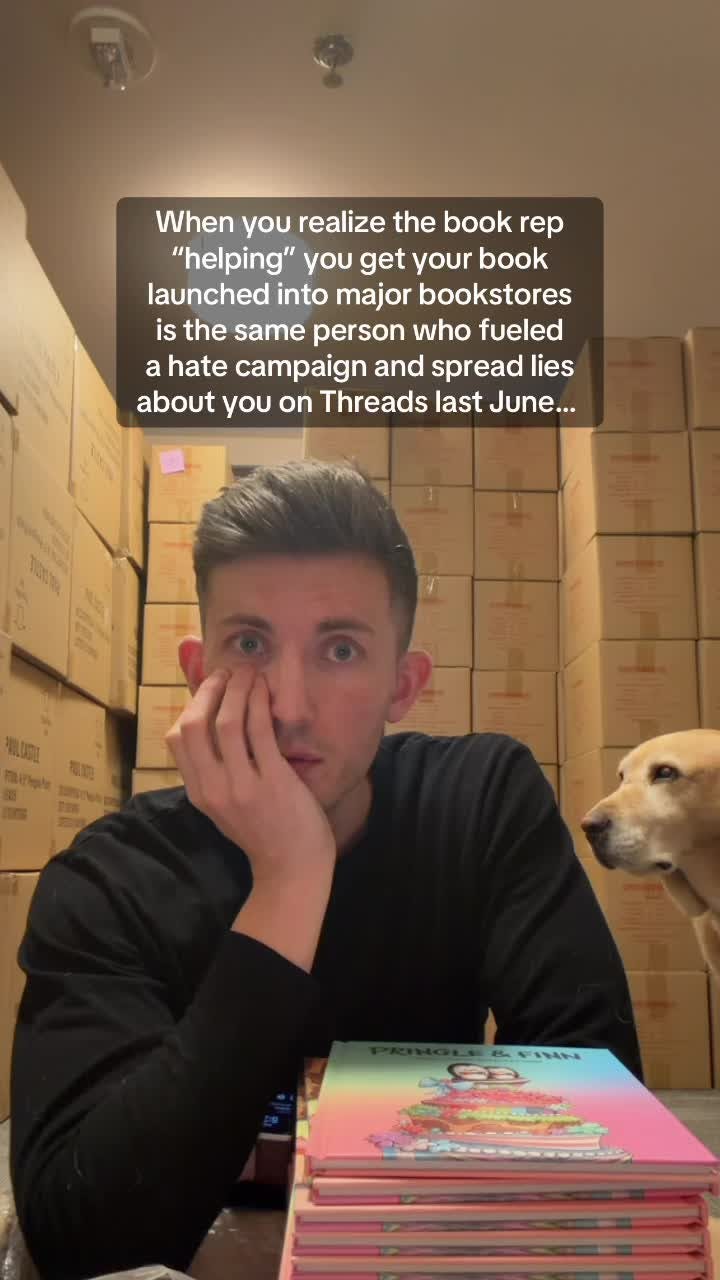
Matthew and Paul posted another sponsored video, sharing that they were devastated to learn they’d have to work with the same Ingram employee as before, Emily.
While Ingram is considered to be a large company, there are only so many staff that specialize in onboarding, acquisitions of customers, distribution, of which Emily is one. So as Paul Castle Studio worked to meet Ingram’s criteria for wholesale distribution, it was almost inevitable they’d cross paths with her again.
Emily’s role at Ingram involves acquisitions and education for incoming authors. She puts their info into the Ingram system and recommends metadata improvements to make titles more discoverable and enticing to bookstores. But she doesn’t have any say in whether a store actually orders a book, let alone an author’s success.
Castle shared disappointment with Emily’s involvement, which many interpreted as questioning her trustworthiness and ethics. Exhausted authors and industry folks rallied this time. Though they were loath to defend Ingram (a company who often makes author’s lives difficult) they showed up in masses to protect Emily.
Another group that showed up and had Emily’s back was the queer community. Many expressed frustration with Castle’s repeated use of queer identity and pity marketing as a sales tactic, particularly after years of similar controversies.
The reaction caused this discussion to become a trending topic across social media with thousands of people engaging.
PCS told his fans he’d be back with receipts of the Ingram employee’s alleged “hate campaign” against him. He began showing her comments from Threads as evidence of such hate. This included:
a screenshot where she referenced them “charging authors” to be published.
a screenshot where she referenced confidential information while working on their account regarding ISBN questions.
Castle accuses her of damaging their brand by calling them a vanity press—a publisher who publishes books at the expense of the author. However he took this out of context again. Because PCS had, in June, made an announcement about taking on other authors, and opened for their submissions, it caused a community-wide discussion of speculation. Because there had been no update from PCS and since this announcement and because they did not answer many questions asked about their planned structure. So this comment from Emily is responding to a collective belief of the discourse. Many small publishers have to start as a vanity press until they make the capital to support authors on their own. And forget about offering advances like big name publishers are able to do.
The second piece, about ISBNs is the only legitimate claim PCS has Emily having done a single thing wrong. And at the same time, they only have themselves to blame. Should an employee have shared account or communication details on socials? No. But this never would have happened if PCS hadn’t pressed the situation, accused her of a hate campaign which caused his followers to harass her… again. She should not have shared that detail, but likely did so trying to defend herself.
Why is this controversial?
There’s no evidence that Emily interfered with Paul Castle Studio’s business. Her job simply put her in contact with them again. Framing this as betrayal or sabotage appeared, to many, like another instance of DARVO (Deny, Attack, Reverse Victim and Offender) a manipulation tactic where the person who caused harm repositions themselves as the victim.
This video series appeared just before the holiday season and coincided with a reminder the week’s prior about his “book banning” and “review bomb” claims, in a pattern that’s led many to suspect these moments of outrage are strategic.
A Strange Shift…
PCS then allegedly receives an email from a higher up at Ingram, and this is where his behavior began to change. In his video addressing the email, he shared with his audience more of the same “evidence” from Emily, but this time her name was blurred out. And for the first time ever, PCS told his audience not to mention her name, that he doesn’t want anyone doxing her, and if he sees her name in the comments he’ll be blocking those people—something he has not done in regard other critics, myself included, whose usernames and faces he continues to display without similar disclaimers. Why just the Ingram employee? Why only now?
Castle also began referring to the employee’s personal statements as reflective of Ingram’s formal stance on the issue. He’s shifted the framing from an individual’s personal comment (from a social media trending conversation) to the behavior of an entire corporation.
My fear is because of the unprofessionalism that has been displayed by the nation’s largest book distribution company, a multi-billion dollar company, they have done irrevocable damage to the indie book publishing company that I’m trying to start.
-Paul Castle Oct 2025
He then claims that “every day since this happened”, somebody sends them a new video, calling them liars and scammers—blaming a company for a community response of being tired of pity marketing, review sculpting, and harassment. He shows several videos, including mine, where people are talking about and referencing his wall of boxes video, HIS VIDEO. But he tells his audience we’re referencing the employee from Ingram. It’s my opinion that he does this, knowing they’ll take his word for it and not check.
And this is twice now that he’s made such a suggestion.
I wanna be very clear in all of my videos and all of my writing. I am responding directly to Paul Castle’s own videos—his own words, claims, and behaviors.
In addition to this, PCS been flashing a headline from a 2021 article about Ingram’s worth, to show they’re a large company and to frame them as being giants, while reminding, he’s a mirco-business. Any intelligent person can understand the optics of this representation.
Castle has also recently begun reposting videos from his critics while simultaneously deleting their comments from his own posts. It’s a strange contradiction. If the goal were open dialogue, why erase the conversation? If the goal were control, then why repost?
This situation is ongoing and I’m sure there will be more details to come.
It’s easy to scroll by this without the entire context and think it’s just more internet drama. But when someone with a massive platform repeatedly frames business setbacks as discrimination, it causes harm. Performative victimhood hurts the people it claims to represent. It cheapens the meaning of actual prejudice. It makes people more skeptical when other queer or disabled creators speak up about being mistreated.
This matters because people like Matthew and Paul teach audiences the wrong lessons about advocacy, allyship, and accountability. When pity becomes a sales tactic, everyone loses. The customers trying to do good. The communities those tactics exploit. Even the author using that tactic, whose reputation is at stake.
If you really want to make a real difference, if you want to fight real hatred, put your support where it counts. Buy from small queer and disabled creators, not those using their identity to manipulate audiences.
Thank you for reading.
This article took 14 hours of collective work to write. It’s important to me that articles like this are freely available, but if you’d like to support my work, you can buy me a coffee on Kofi.
If that’s not within your means, consider sharing and subscribing to this, always free, weekly newsletter.
Editorial Advisory
This article contains commentary based on publicly available information, records, and social media activity as of the date of publication. All claims regarding events or statements are supported by verifiable sources to the best of the author’s ability. Interpretations or opinions expressed represent fair comment on matters of public interest.
Readers are encouraged to review primary materials and independent reporting to form their own conclusions. The discussion herein is for the purpose of examining public behavior, media influence, and ethical considerations in online marketing and community engagement.
Special shout out to Laura of Book Lover Laura, for summing this up just as well over on YouTube.
https://www.youtube.com/watch?v=GIvwIGzyEx0
I commented on his Instagram post that it was convenient he had problems right as the holiday shopping season began and he was only telling his side of the story. Well, now I'm on peoples DNR lists (they weren't going to read me anyway) and even got a dm from an "attorney" hoping I got sued for slander and called a "legalized wh0re" whatever that is...
A funny thing I noticed is many of his followers are private accounts with little to no followers or followings which makes me wonder if they have paid for their followers.